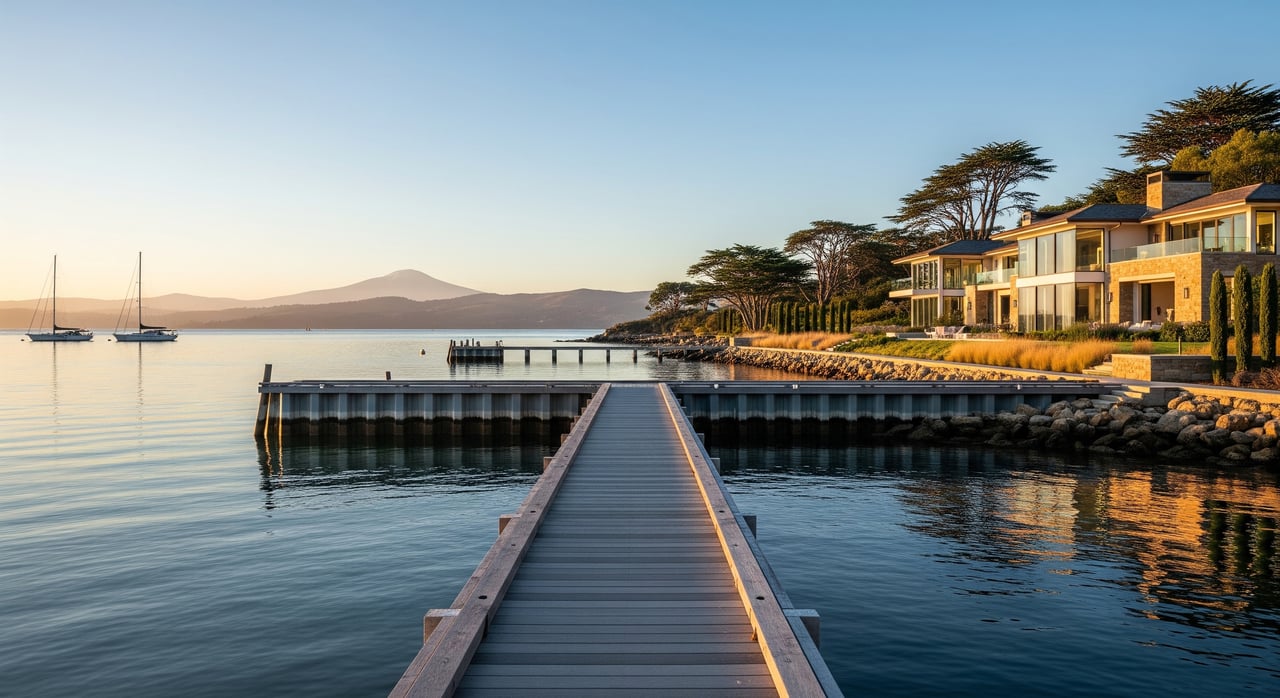
Shopping or selling on Belvedere’s shoreline can feel unlike any other part of Marin. With only a handful of true waterfront parcels, every home is unique and every detail can shift value. In this guide, you’ll learn what drives price in Belvedere’s waterfront market, how to compare properties with confidence, and the due diligence that protects your investment. Let’s dive in.
Belvedere waterfront at a glance
Belvedere is a small, independent city on the Tiburon Peninsula in Marin County, set directly on San Francisco Bay. The geography creates natural scarcity. Lot counts are low, peninsula and point positions are rare, and true shoreline frontage is limited.
Buyers are often motivated by private boat access, unobstructed Bay views, privacy, and proximity to San Francisco. Cash and jumbo financing are common in this luxury segment. Thin inventory and unique site features make accurate comparisons more nuanced than typical inland homes.
Core drivers that move price
Lot type and position
- True waterfront vs. elevated view. Direct shoreline frontage with legal waterline access commands the top premium because it can include private dock potential and unobstructed vistas. Elevated view lots can be stunning, but they usually price below comparable shorefront parcels.
- Peninsula and point locations. Lots with exposure on multiple sides and panoramic views are scarce and often trade at significant premiums.
- Orientation and sightlines. Southern exposures toward the Golden Gate and San Francisco are prized, while less appealing sightlines can temper value.
- Usable frontage and privacy. Longer usable shoreline and minimal public rights-of-way between the house and the water increase desirability. Public paths or easements can reduce perceived privacy and price.
Dock access, moorage rights and marine improvements
- Type and legality. A permitted private dock or boathouse offers the highest utility for boat owners and can add material value. Shared docks or community slips are beneficial but carry smaller premiums. Mooring buoys can help where slips are limited, but rights need careful verification.
- Permits and recorded rights. Transferable permits and recorded riparian rights are essential. Agencies that may have jurisdiction include the San Francisco Bay Conservation and Development Commission, the U.S. Army Corps of Engineers, the California State Lands Commission, and local Belvedere and Tiburon planning and building departments. Unpermitted or nonconforming structures can depress price.
- Condition and capacity. Depth at low tide, tie-up capacity, wave protection, and utilities matter. Aging docks or substandard construction can require costly replacement, which buyers will price in.
Architecture, design and finishes
- Architectural cachet. Renowned architects or notable mid-century and contemporary designs can elevate value beyond square footage.
- Indoor/outdoor flow. Open plans, large window walls, terraces, and low-maintenance landscaping are highly valued on the water.
- Systems and finishes. Updated kitchens, new mechanical systems, and integrated smart home and security features boost buyer confidence.
- Renovate or rebuild math. For older homes, buyers weigh seismic, foundation, seawall, and modernization costs against a rebuild. Market pricing reflects those expected capital needs.
Coastal, structural and environmental condition
- Seawalls and shoreline protection. Presence, design life, and condition of seawalls or bulkheads are critical. Repair and replacement can be expensive, and owners are typically responsible unless a shared program exists.
- Erosion and flood risk. FEMA flood zone status and sea-level rise vulnerability can affect insurance costs, mitigation needs, and future risk profile. These factors often require price adjustments or capital reserves.
- Inspections and reports. Coastal structural engineers, marine surveyors, and geotechnical experts are standard for underwriting true waterfront assets.
Permitting, planning and insurance
- Multiple agencies. Shoreline and in-water improvements may require approvals from BCDC, USACE, the State Lands Commission, local Belvedere and Tiburon departments, and regional water quality boards. Height limits, setbacks, and any historic overlays can shape rebuild potential.
- Flood insurance. Availability and pricing under the National Flood Insurance Program and private markets influence carrying costs and financing.
Scarcity, comps and neighborhood context
- Thin sales volume. In a niche with few annual sales, each closing carries outsized weight. Unique properties need multiple “leveling” comparisons, including waterfront and non-waterfront reference points.
- Location nuances. Access to Belvedere Cove, the Belvedere Lagoon, ferry service, marinas, parks, and Tiburon amenities can justify meaningful adjustments in a comp set.
How to evaluate value like a pro
Use this stepwise approach when reviewing a Belvedere waterfront property:
- Start with the most recent Belvedere sales that match the lot type first. Group by true waterfront, peninsula or point, and elevated view lots.
- Review sale-to-list ratios and days on market to gauge demand and pricing power in each subgroup.
- Adjust for the biggest drivers:
- Dock or private moorage type and condition
- Linear feet of usable shoreline
- Elevation and flood zone exposure
- Overall condition and recent renovations
- Architectural significance
- Lot size and usable outdoor space
- Confirm legal rights through county records and the MLS. Verify deeded riparian rights, recorded easements, and any dock or wharf permits.
- When direct comps are scarce, include recent waterfront sales in adjacent Tiburon or other relevant Marin bayfront pockets. Apply disciplined adjustments for neighborhood premium before drawing conclusions.
Two quantitative metrics can help, with caveats:
- Price per square foot is common, but it can mislead on the waterfront where lot features and design drive large spreads.
- Price per linear foot of shoreline can be useful among comparable shoreline parcels. Always focus on usable frontage and dock capacity rather than raw footage alone.
Essential due diligence checklist
Request and verify these items early. They reduce risk, speed escrow, and support pricing confidence.
- Title and property documents: deed, recorded riparian rights, easements, CC&Rs, and recorded dock or wharf permits.
- Permits and approvals: building, dock, and seawall permits, plus correspondence with BCDC, USACE, and the State Lands Commission.
- Structural and marine inspections: seawall or bulkhead condition report by a coastal engineer, dock and mooring depth survey by a marine specialist, and geotechnical assessment if slopes or foundations warrant it.
- Environmental and flood data: FEMA flood maps, any elevation certificate, and local sea-level rise vulnerability information or adaptation plans.
- Building systems: recent roof, HVAC, electrical, plumbing, pest or termite, and seismic retrofit reports.
- Insurance and financing: current quotes for homeowner and flood policies, confirmation of insurability, and any lender requirements for appraisals and engineering reports on jumbo loans.
- Community and access: verify shoreline access, public easements, neighbor rights, and any HOA rules if applicable.
Current market dynamics
For sellers
- Expect detailed buyer scrutiny on seawalls, dock permits, and long-term flood or sea-level exposure. Organized documentation builds trust and momentum.
- Coastal resilience upgrades, like seawall improvements or elevating mechanicals, can improve marketability. Balance costs against likely price impact.
- Thin comps require a strategic pricing plan. Pre-listing engineering reports and permit histories help your agent position the property with confidence.
For buyers
- Budget for lifecycle capital: seawall maintenance, shoreline mitigation, dock repairs, and flood premiums. These are part of true ownership costs on the water.
- Think long term. Some buyers pay top dollar for private docks and direct water. Others prefer elevated view lots to avoid immediate coastal maintenance.
- Financing and underwriting for jumbo loans on unique waterfront assets can take longer. Build extra time into your plan.
Macro influences
- Interest rates, overall luxury sentiment, and regional inventory levels shape timing and price. Rate shifts can extend decision timelines and increase the role of cash.
Views vs. direct water access
Both are valuable in Belvedere, but they trade differently.
- Direct waterfront delivers private moorage potential and the most immersive Bay experience. Buyers price in dock utility, usable shoreline, and seawall condition.
- Elevated view homes offer dramatic panoramas with less day-to-day coastal maintenance. They can be prized by buyers who want views without the marine upkeep.
- Peninsula or point sites often combine the best of both. Rarity tends to set the ceiling for these parcels.
Appraisals, insurance and financing
Luxury waterfront appraisals rely on sold comps, but scarcity, remodels, and unique features create wide ranges. Lenders may ask for environmental, structural, and seawall condition reports, especially on jumbo loans. Be prepared to supply detailed documentation.
Flood insurance availability and pricing can affect both demand and financing. Understand your FEMA designation, explore private market options where appropriate, and get quotes early. Underwriting criteria can shift, so current policy terms and costs should be part of every offer or list strategy.
Partner for clarity and results
Waterfront value in Belvedere is shaped by the shoreline in front of you and the paperwork behind it. A clear plan for comps, permits, and inspections keeps you in control, whether you are buying or selling. If you want a calm, data-informed process paired with hands-on management of contractors and inspections, connect with Kris Klein to map your next steps.
FAQs
How much does a private dock add to value in Belvedere?
- Premiums vary widely with permitting, capacity, depth, protection, and overall condition, so use recent local comps with similar dock quality and verify all recorded rights before estimating impact.
How do FEMA flood zones affect price and insurance for Belvedere waterfront homes?
- Homes mapped in higher-risk zones often face higher insurance costs and mitigation needs, which buyers price into offers; obtain flood zone data and quotes early to understand true carrying costs.
Who controls permits for docks and seawalls on Belvedere Bayfront homes?
- Shoreline and in-water work may require approvals from BCDC, the U.S. Army Corps of Engineers, the California State Lands Commission, and local Belvedere and Tiburon planning and building departments.
How should I pick comps when few Belvedere waterfront sales closed this year?
- Start with recent Belvedere sales that match lot type, then adjust for dock rights, usable frontage, elevation, condition, and architecture; expand to adjacent Tiburon waterfront sales with careful neighborhood adjustments.
Which experts should I hire before listing or making an offer on a Belvedere waterfront home?
- Engage a coastal or marine engineer, a marine surveyor, a geotechnical engineer if needed, an experienced local appraiser, and a title professional to verify deeded rights, easements, and permits.
Do panoramic views without water access trade at a discount in Belvedere?
- Elevated view homes often price below comparable true waterfront parcels, but exceptional orientation, architecture, and updated systems can narrow the gap and attract strong demand.