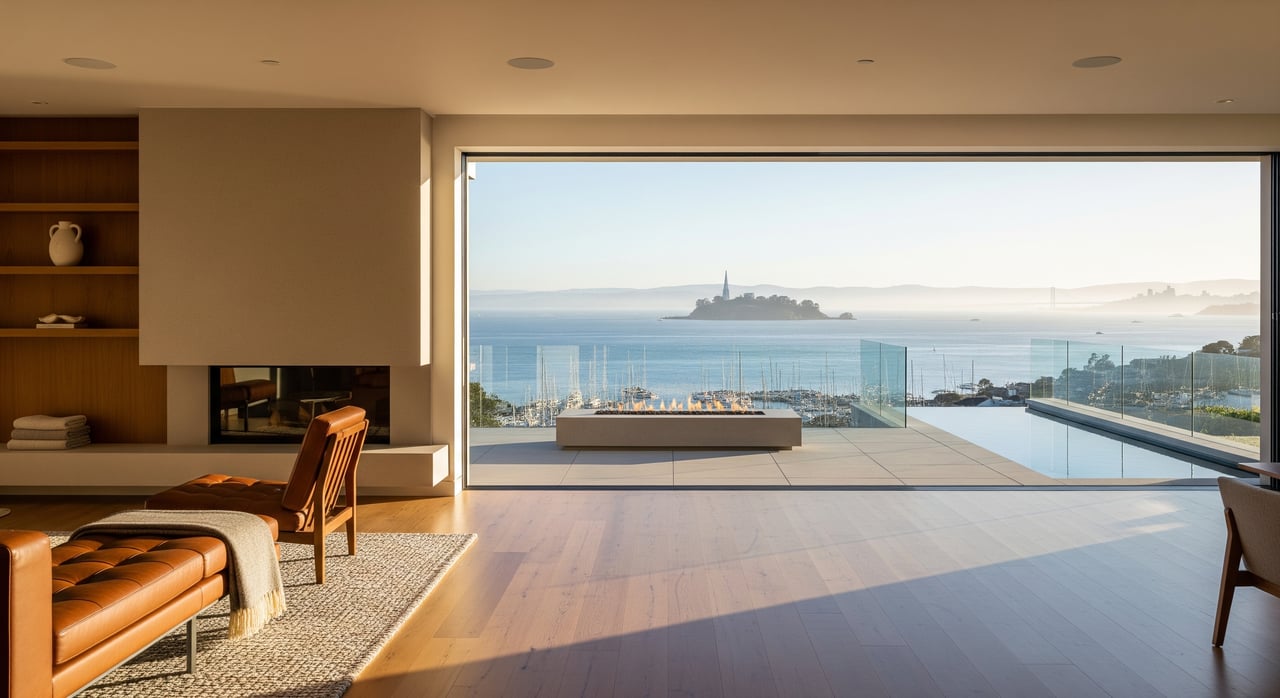
Picture this: you wake up to glassy water in Richardson Bay or watch the sun slide behind the San Francisco skyline from your deck. Buying a view home in Tiburon can deliver that daily magic, but the details matter. From wind and fog to slopes, inspections, and long-term upkeep, smart choices today protect your comfort and your investment tomorrow. In this guide, you’ll learn what to look for, how to evaluate risks, and how to keep the view you’re paying for. Let’s dive in.
View types and orientation
A great view starts with where the home faces and what you see day to day.
Sun and exposure
- Western or southwestern exposure often brings sweeping city and sunset views. You may enjoy warmer late afternoons and glowing evening light.
- Eastern exposure favors morning sun and calmer early hours over Angel Island and the bay.
- Northern exposure can run cooler with less direct sunlight, which may be welcome in summer but cooler in winter.
View quality and depth
- Panoramic, unobstructed water plus skyline views tend to command the highest premiums.
- Partial or intermittent views across gaps, or views that disappear in the marine layer, carry less value.
- Foreground matters. Nearby roofs, trees, and power lines can distract from distant water or skyline.
Protecting the view
- Check nearby zoning and permitted building heights to gauge future obstruction risk.
- Review title documents for view easements or restrictions.
- Ask the planning department about any proposed development on neighboring parcels.
Microclimate and wind
Tiburon and eastern Marin have distinct microclimates that shape your daily experience.
- Fog and the marine layer often soften morning visibility, especially near the water.
- Exposed sites near Richardson Bay or on ridgelines can see stronger winds that affect outdoor dining, deck comfort, and wear on finishes.
- Sheltered coves and south-facing slopes tend to be warmer and calmer, which can extend your outdoor season.
Tip: Visit the property at different times of day and on a breezy afternoon. Bring a jacket and sit outside for 15 minutes. You’ll feel the microclimate for yourself.
Hillside, slope, and seismic risks
Many Tiburon homes sit on slopes with incredible outlooks. Slopes require careful evaluation.
- Seasonal saturation and storm infiltration can trigger slope instability or landslides.
- Earthquake shaking can stress hillside foundations, piers, and retaining walls.
- For any sloped property, plan on a site-specific geotechnical report to assess stability, drainage, and foundation design.
What to look for on a tour:
- Retaining walls with bowing, cracking, leaning, or water staining.
- Signs of past settlement around decks, patios, or stairs.
- Drainage elements like swales and downspout extensions, and whether they discharge away from the home.
Shoreline and flood checks
Waterfront or low-lying properties offer dramatic views and unique responsibilities.
- Review FEMA flood maps to understand flood zone and whether flood insurance may be required by your lender.
- Consult regional resources for sea-level rise planning to understand long-term exposure.
- Shoreline elements like seawalls, bulkheads, docks, and pilings often require permits to build or replace and can be expensive to maintain.
Ask the seller for maintenance records and permits for any shoreline structure. If in doubt, bring in a coastal or marine engineer.
Wildfire and vegetation
Parts of Marin County are in the Wildland-Urban Interface. That means vegetation management and defensible space matter.
- Check CAL FIRE hazard maps to understand area classification and potential insurance impacts.
- Plan for fire-resistant materials and ongoing vegetation work near the structure.
- Some insurers may require mitigation steps as a condition of coverage.
Salt air and corrosion
Marine air is tough on materials. Set expectations for higher maintenance.
- Metal fasteners, railings, and HVAC condensers can corrode more quickly.
- Exterior paint, siding, and window seals may have shorter lifespans.
- Decks and waterproofing need periodic inspection and timely repairs to prevent water intrusion.
Inspections you need
View properties often require a deeper inspection stack to reduce surprises.
Core inspections
- General home inspection for structure, roof, electrical, plumbing, HVAC, and moisture.
- Pest and dry rot inspection, especially for older wood-framed homes.
- Geotechnical report for sloped, bluff-top, or hillside sites.
- Structural or engineering review of foundations, retaining walls, and decks.
- Drainage and stormwater evaluation, including subsurface systems and discharge points.
- Roof, flashing, and deck ledger assessment to catch common leak paths.
- Chimney and fireplace inspection if present.
- Flood elevation certification when required for lending or insurance.
- Asbestos and lead testing in older homes if you plan to remodel.
Specialists to consider
- Coastal or marine engineer for seawalls, bulkheads, docks, or pilings.
- Retaining wall specialist or civil engineer for tie-backs, drainage, and wall condition.
- Arborist for tree health and risk assessment on slopes.
- Wildfire and defensible space consultant for WUI properties.
- Environmental consultant for sites near wetlands or regulated shoreline.
- Land-use or real-estate attorney for easements and title questions, including view protections.
Permits and unpermitted work
Permits tell the story of what was built, when, and how.
- Obtain the permit history from the Town of Tiburon or Marin County for additions, decks, retaining walls, shoreline work, and structural changes.
- Flag unpermitted work early. It can affect lending, insurance, and resale and can be costly to correct.
- Ask for finaled permits, not just applications, to confirm sign-off.
Maintenance and insurance costs
Plan your budget with the location and exposure in mind.
Ongoing upkeep
- Exterior painting and siding at shorter intervals due to wind and salt.
- Window and door seals, hardware, and coatings maintained or replaced sooner.
- Decks, railings, and waterproofing inspected annually and serviced as needed.
- Drainage systems cleaned, tested, and repaired before the rainy season.
- HVAC service cycles adjusted for salt and wind exposure.
Insurance and financing
- Flood insurance may be required for low-lying or shoreline properties.
- Wildfire and earthquake risks can increase premiums or underwriting conditions. Get quotes early.
- Lenders may ask for geotechnical documentation on steep sites and special endorsements for known hazards.
Long-term capital items
- Seawall or bulkhead repairs and replacements are significant and may require permits.
- Retaining wall replacement, slope remediation, or new subdrains can be major investments. Keep a contingency in your plan.
Valuation and negotiation
Views are a premium amenity. Knowing how they are valued helps you buy with confidence.
- Appraisers look for comps with similar view quality. Water plus skyline with unobstructed sightlines tends to carry more value than partial views.
- Permanence matters. A protected view with low obstruction risk usually commands more than one likely to change.
- Premium properties can be less liquid in a softer market. Pricing and patience matter.
Practical steps:
- Request any recent appraisals, geotechnical reports, permit histories, and maintenance records from the seller.
- Use a local appraiser familiar with Tiburon and Marin view dynamics to explain the view adjustment in writing.
- Build contingencies for geotechnical and structural inspections into your offer.
Buyer checklist
Use this quick list to keep your process on track.
- Confirm jurisdiction. Is the home in the Town of Tiburon or unincorporated Marin? Rules and permit paths can differ.
- Review zoning, height limits, and any overlay zones that could affect neighboring build-out and your future view.
- Pull FEMA flood maps and regional sea-level planning references for shoreline exposure.
- Order key inspections: general, pest, geotechnical, structural, drainage, roof and deck, plus shoreline or elevation certifications as needed.
- Get early insurance quotes for homeowner, flood, and considerations related to wildfire and earthquake.
- Investigate future development on adjacent parcels through planning files and public records.
- Verify permits for decks, retaining walls, additions, and any shoreline structures.
- Budget for elevated maintenance and have the seller share maintenance logs and contractor records.
- Consider local specialists who know Marin soils, coastal structures, and the local permit process.
Partner with a local guide
Buying a view home in Tiburon is about more than a postcard scene. It is about the right orientation, a comfortable microclimate, sound engineering, and a plan for long-term care. With calm, organized guidance and strong negotiation, you can secure the view you love and protect your investment.
If you want a steady hand who understands Marin’s hillside and shoreline nuances, inspection strategy, and how to position a winning offer, reach out to Kris Klein. You will get local expertise, clear communication, and end-to-end support from search to closing.
FAQs
What makes Tiburon view homes different from other Marin properties?
- Many are on slopes or near the shoreline, so microclimates, wind, drainage, and structural systems play a larger role in comfort, maintenance, and valuation.
Which inspections are essential for a Tiburon view home purchase?
- Start with general and pest inspections, then add a geotechnical report, structural review of foundations and retaining walls, drainage evaluation, and roof and deck assessments.
How do I know if my Tiburon view could be blocked in the future?
- Review nearby zoning and height limits, request planning files for adjacent parcels, and check title for any view easements or restrictions that protect sightlines.
Are shoreline Tiburon homes at higher risk of flooding?
- Shoreline and low-lying sites can face tidal and storm surge risks, and lenders may require flood insurance based on FEMA maps and elevation data.
Why is wind a big factor for Tiburon hillside homes?
- Exposed locations can see strong gusts that impact outdoor comfort, wear on finishes, and even noise and HVAC loads, so site exposure matters.
How do appraisers value the view in Tiburon?
- They compare sales with similar view quality and adjust for type, breadth, and permanence, with unobstructed water plus skyline views typically commanding the highest premium.
What long-term costs should I plan for with a view home?
- Expect higher spending on exterior paint, windows, decks, drainage, and possibly major items like retaining wall or seawall work, depending on location and exposure.